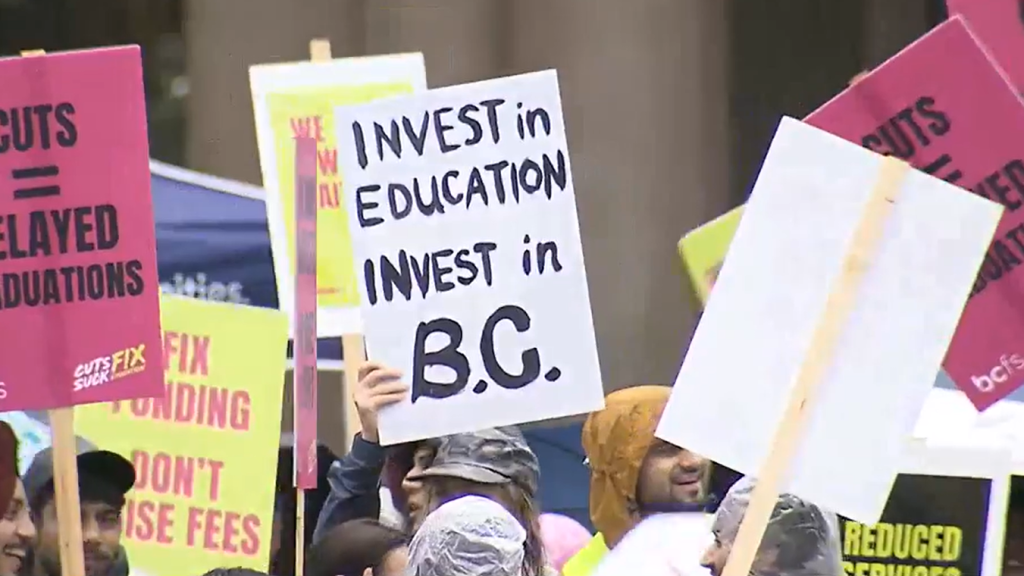
Underneath the crowd of umbrellas and ponchos outside of the Vancouver Public Library are students and teachers with a clear message against potential tuition hikes at universities and colleges.
The rally on Saturday, organized by the British Columbia Federation of Students, comes as the province launches a sector-wide review of post-secondary education, including how schools are funded and potential tuition increases.
CLICK HERE TO LISTEN TO 1130 NEWSRADIO VANCOUVER LIVE!“Provincial government created a system soaked in gasoline, and the federal government just lit the match,” said Cole Reinbold, a graduate from Vancouver Island University.
“If the province says that B.C. needs more nurses, more teachers, more tradespeople, if they want that, they need to fund post-secondary because that’s the only way that we’re going to get those nurses and teachers.”
Students argue that tuition hikes would make post-secondary education financially out of reach for many.
This is at a time when post-secondary institutions are already facing financial strain.
“We are really pricing students out of the system right now,” Reinbold added.
“Tuition has been the only thing that has kept pace with inflation, but government funding has not substantially increased since the year 2000.”
Organizers say rising rent and food costs mean that many students are having to work more, delaying graduation for some.
In the meantime, fewer international students as a result of federal study permit caps are cutting into school revenues, causing schools to cut courses and scale back teaching staff.
“Students sometimes have to work multiple jobs just to be able to afford rent, just to be able to pay for the tuition,” said Debi Herrera Lira, a student at Douglas College.
“I’ve done that. I’ve lived through that, and I don’t want any other student in the province to live through that as well.”
Teachers join students in protest
Instructors say the financial pressure is already being felt in classrooms.
“A quarter of us have lost their jobs now, and this means reductions in classes, which makes it harder for students to get the classes they need to complete their program,” explained Langara College instructor Bradley Hughes.
Protesters are calling on the province to increase operating funding for post-secondary institutions and to keep the tuition cap in place, warning that higher fees could mean fewer graduates in critical fields.
“But I don’t see why we need to review [the post-secondary education system],” Hughes said.
“I was in protest when I was a student 20 years ago against tuition fees and the liberal cuts. The solution is clear. Put the funding into public education.”
The province has not said whether the tuition limit policy will change, but the review is expected to continue in the coming months.