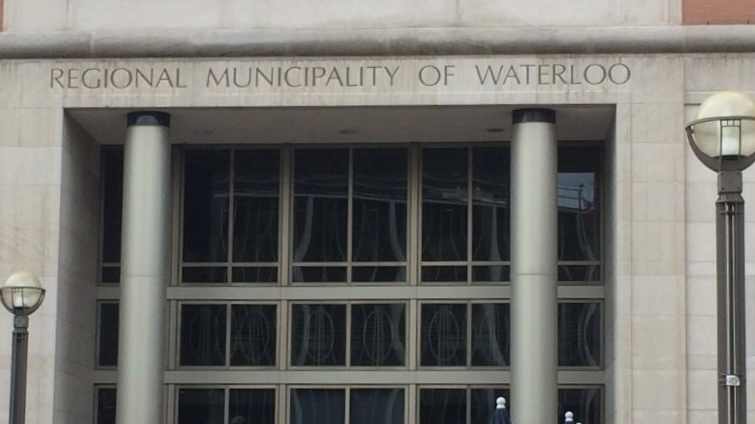
Hours of discussions around the regional horseshoe once again, as possible solutions poured in to council for Waterloo Region’s water capacity problem.
The talks stemmed from a report detailing a list of possible solutions, including immediate, short, medium, and long-term fixes that could bring the region back where it needs to be for its water supply.
Those range from immediate repairs to a new modular technology, a new pumping station, well expansions, reallocating water supply, and an overhauled water supply strategy for the region, looking ahead through 2051.
“We recognize the urgency, and I want to reassure the community that we are leaving no stone unturned on our path forward. We are committed to a collaborative, solutions-based approach that harnesses expertise from across Waterloo Region,” said Acting CAO, Mathieu Goetzke.
While councillors heard about those potential solutions, no concrete fixes were set in stone.
With the report now in hand, regional staff are able to look over the details and introduce recommendations back to council in March. Some heated talks followed after a possible deferral to April was introduced.
“This motion is intended to start sending some clear signals to the community and to the industry about how we’re dealing with this in a timely manner and making sure that there is effective dialogue between the region and area municipalities in order to move projects forward that are going to impact over 30,000 jobs in this community,” said Kitchener Mayor Berry Vrbanovic. “I don’t think this can be deferred another month, so that we can, quite frankly, not have folks looking at this in the meantime.”
He pushed that a potential deferral was just not acceptable, particularly when it comes to the urgency of the work needed.
Ultimately, much of council agreed with Vrbanovic, so a presentation will be brought to councillors as originally expected, in March.

While the water capacity problem and its possible fixes were the main focus of talks amongst those councillors, the implications of the current impact were also a key part of the discussions.
A motion was tabled that would have seen new developments within the region, allowing staff to work with municipalities on development applications and “use up to fifty per cent of planned and unbuilt capacity coming online within the next five years to support development approvals.”
That caused a stir amongst councillors and city staff alike, with Amy Shaw, Director of Water and Wastewater Operations with the region, saying the region needs to remain cautious on how it progresses.
“I cannot sign a form one knowing that we are above the sustainable capacity. If something happens under the Safe Drinking Water Act, I am criminally liable, as is council, so I cannot support this motion,” Shaw stated. “I know technical staff will not be signing form ones until we’ve completed this risk-based approach that we’ve talked about.”
Councillors ended up agreeing that it couldn’t move forward with issuing new developments in the region, at least until that set solution is adopted by the municipality.
“This is the top priority for Regional Council,” said Karen Redman, Regional Chair. “We are acting now and working closely with our municipal and provincial partners to move solutions forward. This is about accelerating projects that will restore capacity, strengthen our system, and provide clarity and confidence for our community.”
Delegates voice thoughts on paused developments, Wilmot Land Assembly
While the regional horseshoe was filled with discussions from councillors, some local delegates were also in attendance to voice their own thoughts surrounding the region’s water capacity constraint.
In the crowd was a wave of yellow shirts adorned with “No Farms, No Food, No Future,” worn by advocates against the Wilmot Land Assembly. They pointed to the region’s water supply issue as a reason to pause further development.
“Wilmot residents should never bear the future water risk to support an industrial development that has not even been identified,” said Wilmot resident John Jordan. “No identified industry means no defined water demand. This is a critical point.”
He said that if the region has paused new developments because of water constraints, a project as large as the Wilmot Land Assembly should also be shelved, saying there isn’t enough known about the water needed if the assembly continues as planned.
“The land assembly is a point of no return. Once these farms are sold, the region becomes financially committed. Political pressure to proceed will increase, and water risk discovered later will not reverse the decision,” Jordan said. “It will be transferred to us, the residents and existing users. I, for one, am not willing to take such a risk, but is this council willing to risk our water supply?”

Others in attendance, including Kevin Thomason with the Grand River Environmental Network, pointed a portion of the blame towards the province.
“The provincial government has brought in act after act for the benefit of a few against the greater public good,” Thomason stated. “We have seen the powers of our local governments reduced and overridden with little study or justification.”
He went on to talk further about the listed expansions under the preliminary list of solutions to the water capacity issue, including a potential pipeline to Lake Erie.
“We didn’t want a Lake Erie pipeline 30 years ago, and we certainly don’t want one from that polluted algae-choked lake right now. The big pipes in York Region and Durham Region have been a disaster, creating huge bills.”
While the evening saw a series of discussions, both from councillors and delegates, no firm decision was made on the capacity problem.
The report is in the hands of regional staff, set to come back with a list of recommendations for council to weigh and vote on in March.