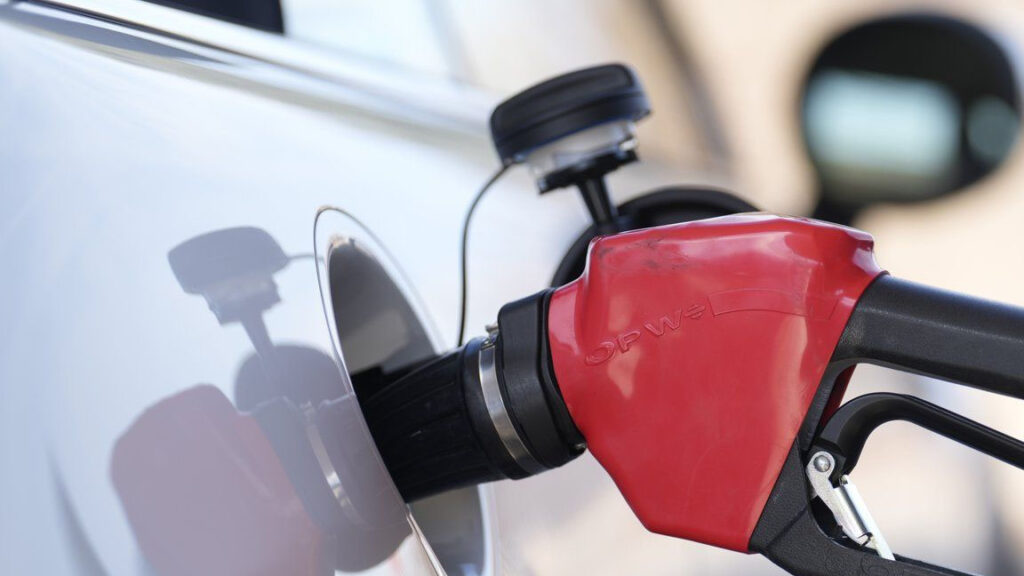
Drivers across Toronto and the GTA will face another spike at the pumps, with gas prices set to rise seven cents at 12:01 a.m. Friday, pushing the average price from 179.9 to 186.9 cents per litre at most stations.
The increase comes amid a turbulent stretch of price swings across the region. According to the CityNews Gas Price Tracker, the GTA has seen everything from sharp drops to sudden jumps throughout April — including a 13‑cent decrease on April 10 (173.9), an 8‑cent surge on April 18 (181.9) and a 5‑cent rise on April 24.
The monthly high was 188.9 cents per litre at most gas stations on April 8, with the low registering at 163.9 cents on April 20 and April 21. Recent days have been comparatively steady, hovering around 176.9 cents per litre before this week’s climb.
The jump also comes despite the recent suspension of the federal excise tax on gasoline, part of a national affordability measure intended to ease pressure on drivers. While the tax pause was expected to help lower pump prices, analysts have noted that global oil markets, refinery output, and regional supply pressures continue to drive volatility.
Industry analysts have warned that the current unpredictability may continue, with forecasts frequently shifting throughout the day due to market fluctuations and refinery dynamics.
A closely watched global crude benchmark briefly touched its highest price since war erupted in the Middle East more than two months ago before retreating on Thursday, as a resolution to the supply squeeze in the Strait of Hormuz remains elusive.
Brent — the price benchmark tied to light, sweet, seaborne crude — for June delivery spiked above US$126 per barrel and then swiftly pulled back toward US$114. That monthly contract is only seeing light trading, with those for July delivery and onward showing a much higher trading volume and less volatility.
In the most actively traded part of the market for Brent, the contract for July delivery reached as high as US$114.70 per barrel overnight. It settled at US$110.40, nearly unchanged from the day before.
So far during the war, the peak price for the most actively traded Brent contract was US$119.50, set last month.
Brent’s price is still much more expensive than its roughly US$70 level prewar.
Further adding to the unpredictability is the fact that there is very little backup crude supply in the market to act as a cushion. In normal times, about 20 per cent of the world’s crude supply passes through the Strait of Hormuz, a narrow waterway connecting the Persian Gulf with the open sea.
Traffic has all but halted since late February, when the U.S. and Israel began their strikes on Iran. There’s been virtually no change in that situation despite the ceasefire announced three weeks ago.
Files from The Associated Press were used in this report