
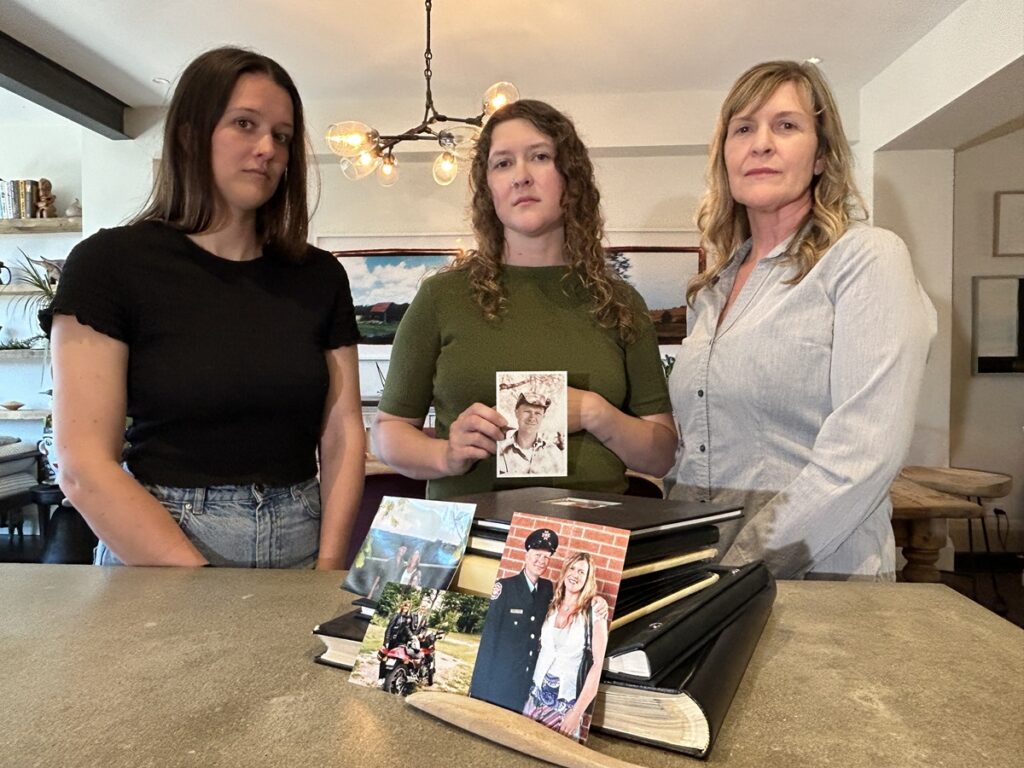
For Zilla Parker, looking at photos of her husband, Dominic, brings back a flood of memories for the two high school sweethearts.
“He just would walk into a room, and he could make people laugh and smile,” she recalled.
“He could make me laugh and laugh and laugh, and I don’t think you can have anything better than that.”
But in 2013, their great partnership came to a heartbreaking end after the off-duty Markham firefighter was stabbed during an unprovoked attack at a now-closed bar and cafe near Danforth and Coxwell avenues.
Parker was in Montreal with the couple’s two teenage daughters, who had just started university, when her husband was stabbed, and the family rushed back home to be with him in his final moments.
“We got a call in the middle of the night, and I didn’t believe it. They said, ‘There’s an incident in a bar,’ and I said, ‘He doesn’t get in the bar fight, that is not my husband. I think you’ve made a mistake.’ I just kept repeating that all the way,” she said.
“We got the very first flight, and we were straight to [St. Michael’s Hospital], and then it was 48 hours before it was clear he was not going to make it.”
Scott Daniel, a friend and former colleague of Dominic’s, recalled how he and his coworkers rushed to the hospital to support Dominic.
“In the fire service, we’re all pretty close, so we all went down to the hospital and spent our last hours with him and the family,” Daniel said.
“Dominic was one of a kind. He had so many careers before he became a firefighter … he was just one of those guys that was true salt of the earth.”
As they entered adulthood without their father, finding a way forward was agonizing for daughters Ryla and Brenna Parker.
“I’ve really made a deliberate choice not to engage with anything related to my father’s killer, and what that meant was focusing on my own mental health and well-being … a lot of it came down to how would my dad want me to continue. He’s going to want me to put one foot in front of the other and carry on and not let this tragedy define my entire existence,” Ryla said.
“As humans, you’re just really resilient … I have a lot of surrogate dads now, and I have a lot of people, luckily, that step in and fill that role, and that’s big shoes to fill,” Brenna said.
Nabil Huruy was subsequently charged with second-degree murder in Parker’s death. In 2015, he was found not criminally responsible. He’s currently diagnosed with schizophrenia and cannabis use disorder.
Since that time, he has been undergoing treatment at the Centre for Addiction and Mental Health (CAMH). However, he moved into a 24-hour supervised treatment facility in South Parkdale at the beginning of December amid a “highly cautious and gradual progression” through the pass system. Officials added that the closer proximity to CAMH reduces logistical barriers and facilitates regular visits to the hospital in addition the services provided at the community facility.
After a hearing held by the Ontario Review Board (ORB) — an independent tribunal that has jurisdiction over individuals with mental health disorders found not criminally responsible — earlier this year, it found Huruy made “substantial clinical progress and has demonstrated sustained psychiatric stability” in the year after his last hearing. The board heard he has participated in various programs, volunteers, attends a mosque and visits his mother on approved visits during weekends.
However, the board emphasized that there are still risks.
“Mr. Huruy has not yet demonstrated sustained stability over an extended period in the community, absent this level of oversight. The board agrees that continuity of supervision, and the ability to intervene promptly, remain critical at this stage of reintegration,” a decision document said in part.
“Any premature reduction in the level of oversight could introduce destabilizing stressors and increase the risk of relapse, with serious public safety concerns. While Mr. Huruy’s insight has improved, it remains partial, and his long-term capacity to independently maintain treatment adherence has not yet been established.”
However, Zilla told CityNews she was not properly consulted about the move. She said she has close family members that she visited regularly who live on the same streets where Huruy is now living, which has forced her into the difficult decision to stop visiting with them.
“I don’t think you should put someone in jail who did something because they have, they’re in some sort of psychosis, they obviously need treatment,” she said.
“The anxiety of this everyday worrying about is my family going to run into him? Am I going to run into him?”
The ORB decision document noted that a representative for the Ontario Attorney General raised an issue in response to the community housing location chosen.
“[Counsel] characterized the issue as systemic, noting that the proximity concern emerged late in the discharge process and that post-placement police notification offered limited reassurance,” the document said.
“While raising these concerns, counsel did not seek readmission or a request that Mr. Huruy be transitioned to alternative housing, acknowledging Mr. Huruy’s stability and the absence of viable alternatives, and instead urged reflection on improved future processes. Counsel advised that the victim’s family members were not pursuing a prohibition on Mr. Huruy’s attendance at any specific locations as they did not want to identify these locations.”
According to the document, Hurey’s lawyer argued relocation “based solely on proximity concerns would risk destabilizing Mr. Huruy and could increase risk by disrupting his established supports.”
“While acknowledging the victims’ experiences, counsel emphasized that the disposition must be grounded in risk. Counsel relied on evidence of Mr. Huruy’s consistent compliance with medication, lack of contact between Mr. Huruy and the victim’s family members, and his ongoing commitment to conditions of his disposition that preserve stability and protect public safety.”

CityNews contacted CAMH to ask about the circumstances surrounding Huruy’s release. In a statement, the institution’s chief of forensic services said she couldn’t comment on the case specifically due to patient confidentiality issues. However, she said staff recognize this type of situation can be “deeply distressing.”
” … the forensic mental health system is a highly specialized area of care, and balancing recovery, rehabilitation, and community safety requires thoughtful and careful consideration. Forensic discharge and community reintegration plans are carefully developed and subject to rigorous review before any transition occurs,” Dr. Treena Wilkie wrote.
“The forensic mental health system is designed to support the treatment and rehabilitation of individuals living with serious mental illness while maintaining a strong focus on public safety. Decisions are informed by clinical evidence, ongoing risk assessments, and independent legal oversight through the Ontario Review Board, and are based on an individual’s progress, treatment needs, and ability to safely live in the community.”
A petition calling for changes to the process has been launched.
“While Nabil Huruy’s treatment and stability are important considerations, they should not outweigh the well-being and mental health of those who continue to live with the consequences of his actions every day. The existence of a suitable alternative residence demonstrates that a solution is available — one that better balances the interests of all parties involved,” the petition said in part.
As of the end of May, there were nearly 2,500 signatures. The Parker family said they hope their story can raise awareness about correcting the system.
“The victims are part of this, and there has been zero support for us as victims. There’s only been support for the perpetrator. How is that balanced?” Zilla said.
“I think that there’s a lot of people who might ask for further punishment. That’s not what we’re asking for. We are in support of his rehabilitation and his healing, and what we’re asking for seems reasonable and fair,” Brenna added.
“An eye for an eye leaves the whole world blind, and I think that, especially considering how much we’ve been through as a family, for us to still have a position of compassion towards mental health and well-being, why is that not being reciprocated on our end?” Ryla said.
With files from John Marchesan