Students at the University of Waterloo will walk out of classes on Wednesday to protest the provincial government’s cuts to the Ontario Student Assistance Program (OSAP).
The one-day strike is being hosted by the Waterloo Undergraduate Student Association (WUSA), an organization that held the vote that led to the strike decision.
More than 3,500 students voted, with an overwhelming 94 per cent voting in favour of a strike on March 4 at 11 a.m., though the voting population only represents about 10 per cent of eligible voters.
“The government doesn’t understand what students are really feeling,” said Damian Mikhail, president of WUSA. “We know that youth unemployment is at sky-high levels, we know that affordability is a major issue, so decisions like this go against all that information that we’re getting.”

According to WUSA, the Doug Ford government’s cuts could reduce the cap of how much of the OSAP loan can be non-payable grants from 85 per cent down to a maximum of 25 per cent.
“We are dealing with a government that does not believe in democracy,” said Waterloo MPP Catherine Fife at Wednesday’s walkout.
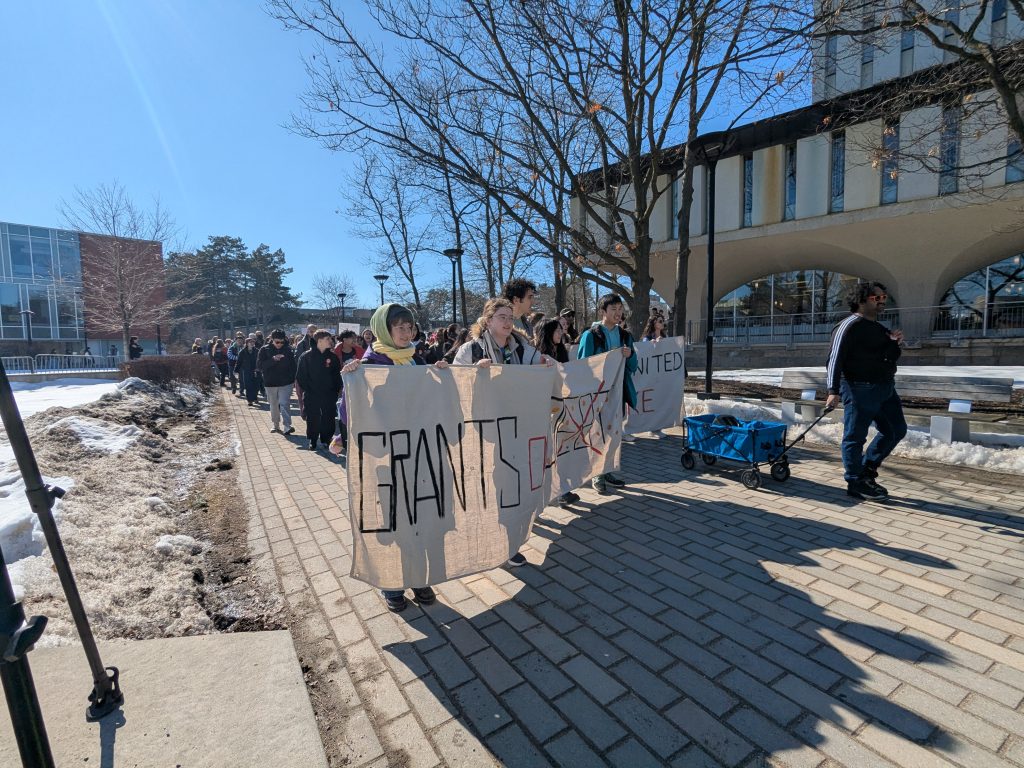
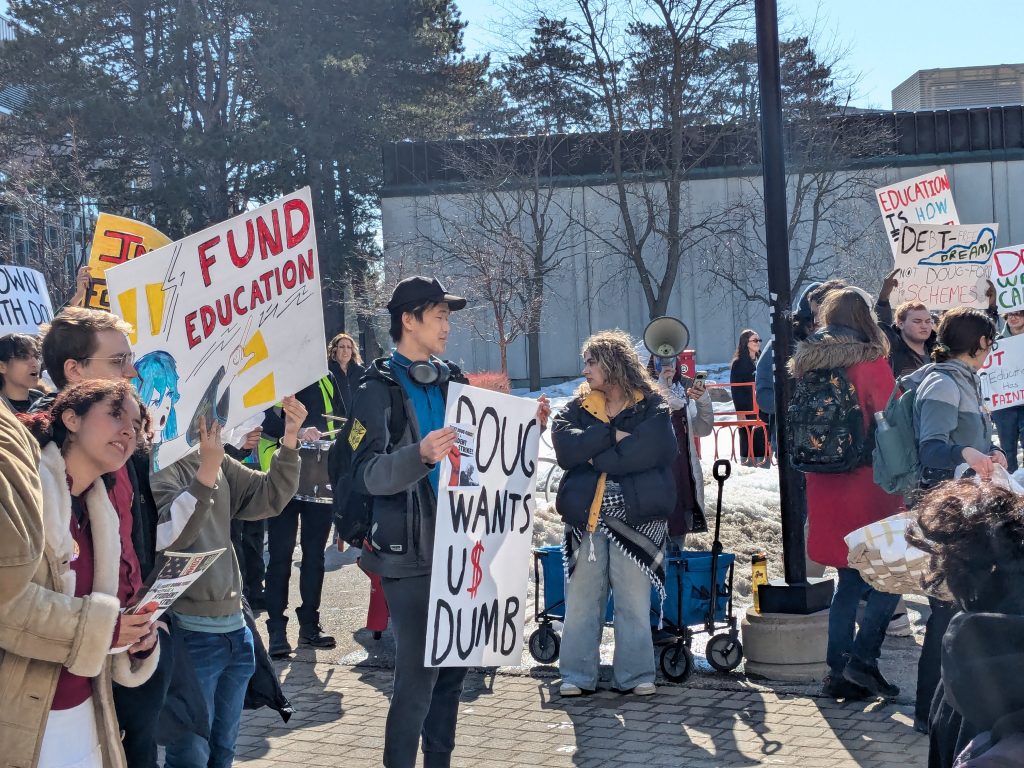
Hundreds of students marched through the University of Waterloo campus, holding signs and chanting.
A similar demonstration was held at City Hall in Kitchener, with high school students from several local schools walking out of class in protest of the OSAP cuts.
OSAP funding ‘no longer sustainable’
According to the provincial government, the costs of maintaining OSAP funding grew to $2.7 billion in 2025/26, and without intervention, would have grown to $4.1 billion by the 2028/29 academic year.
“To restore sustainability to OSAP and ensure its availability for future generations, our government is aligning Ontario’s student financial support framework with other jurisdictions across Canada,” said Bianca Giacoboni, press secretary for Minister for Colleges and Universities Nolan Quinn.
“The Premier and the Minister have been clear that, due to billions of dollars of pressure on the program from the federal government’s decision to remove grant eligibility from students at private career colleges, coupled with increased program uptake in recent years, the OSAP framework was no longer sustainable.”
Giacoboni added that the province has launched student financial support programs to cover the full cost of tuition, books and more for nearly 13,000 healthcare students.
Eligible students can receive OSAP funding comprising 75 per cent loans and 25 per cent grants, a makeup that’s “more sustainable” for future students and in line with provinces like Manitoba, Saskatchewan, and British Columbia.