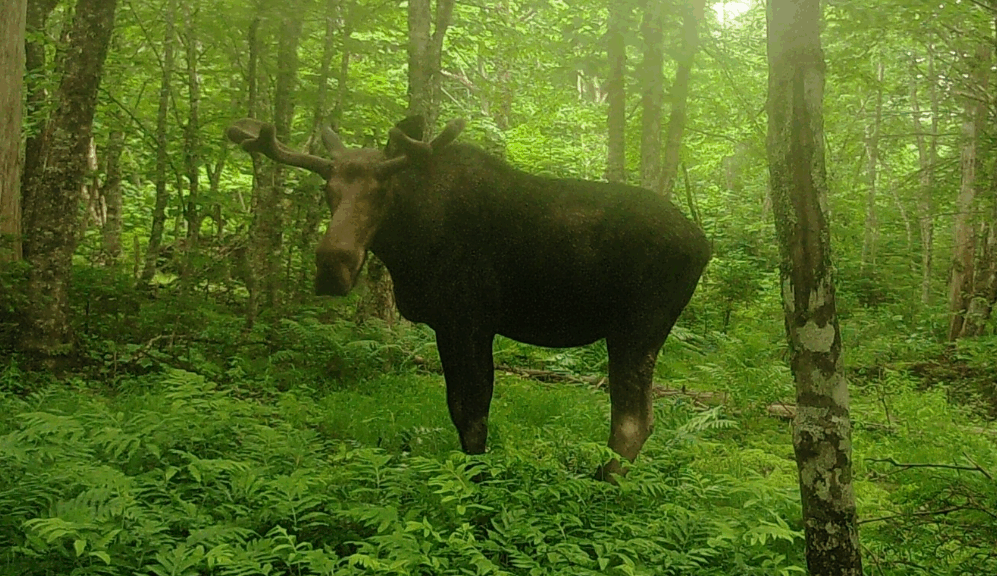
A non-profit group advocating for mainland moose is lamenting a decision by the Nova Scotia government to go ahead with a wind energy project in Antigonish County.
In a statement, the Moose Conservation Association of Nova Scotia (MCANS) said a vital area where an endangered population of moose frequents is now at risk, and the animals “will be displaced, with no suitable alternative habitat nearby.”
The comments follow the government’s announcement on Thursday that the Eigg Mountain project has received its environmental assessment approval.
The province says the Eigg Mountain project will include 22 turbines and is expected to generate 154 Megawatts of clean electricity, which could possibly power more than 49,000 homes.
Development is scheduled to begin late this year and is believed to become operational in 2028; however, the government notes the project must comply with 57 terms and conditions designed to protect the “environment and human health.”
In a statement to CityNews, a provincial for the department of environment and climate change spokesperson said, “I want to assure Nova Scotians that the regulator doesn’t issue approvals for projects unless it is known with certainty, using science and evidence, that they can be done safely and responsibly, from an environmental and human health perspective.”
According to the MCANS, a review of a nearly 500-page document accompanying Environment Minister Tim Halman’s decision showed that support for the project was “primarily confined to those that will be directly, or indirectly, financial beneficiaries of the project.”
MCANS had been pushing for stricter guidelines to be written into the environmental assessment ahead of the approval deadline, such as adding monitor collars on the moose population to track movements.
MCANS president Al Muir previously told CityNews Halifax that with less than 250 moose remaining in the mainland part of Nova Scotia, the population’s migration patterns in the Eigg Mountain area must be studied to ensure potential wind energy development won’t endanger their survival.
The group says that the disregard for the mainland moose on Eigg Mountain is in “direct contravention of the government’s legislated Mainland Moose Recovery Plan.”
Under that 2021 plan, the province promised to address threats, protect and enhance habitat and ensure regular monitoring and assessment of the population health of the endangered mainland moose in Nova Scotia.
MCANS says they will be consulting with other groups to consider options for a legal challenge.