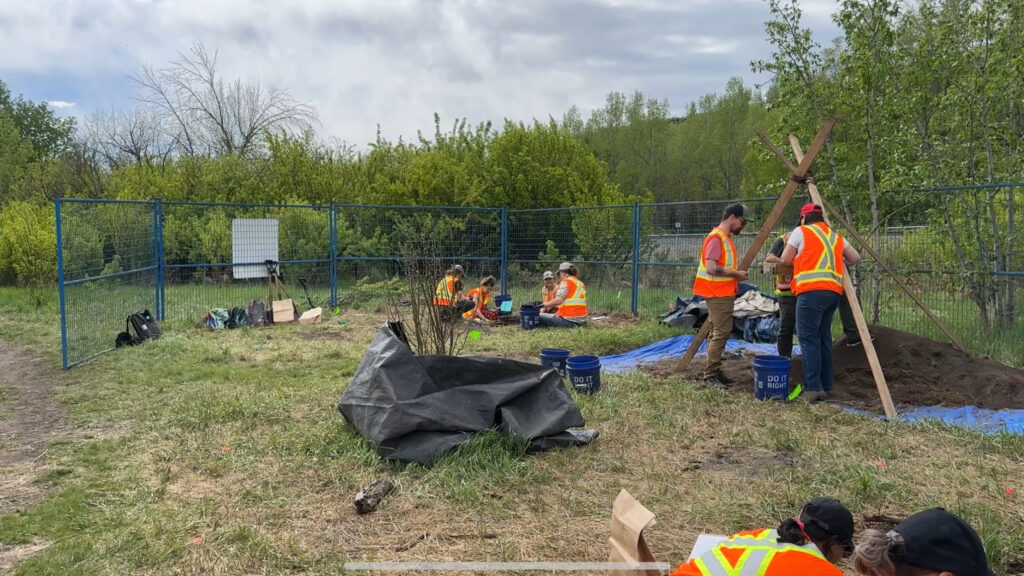
A remarkable discovery buried in a southwest Calgary park is giving archaeologists new insight into the city’s ancient past.
University of Calgary archaeology students have uncovered a stone weapon tip dating back more than 2,000 years, found nearly a metre underground during a field school dig at Edworthy Park.
The discovery was made last week after researchers selected the site based on a series of “shovel tests,” deep probes used to identify areas likely to contain buried artifacts.
Assistant professor Lindsay Amundsen‑Meyers says the team uncovered what’s known as a Bracken point, a type of projectile tip used with an atlatl, or dart thrower, long before the bow and arrow arrived in the region.
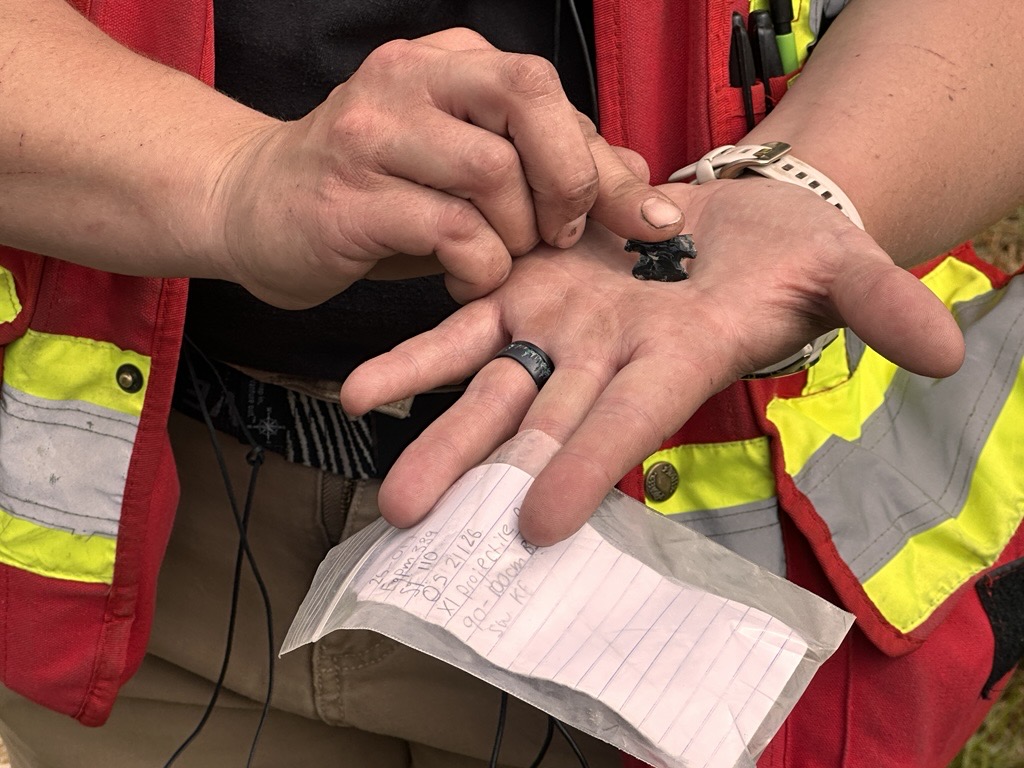
“It’s a dart point that’s in that sort of almost 2,000 to 3,000‑year range, and it was about 90 centimetres below the current surface,” she said.
The excavation site reveals multiple layers of Calgary’s history, from an Indigenous campsite to the former homestead of Thomas Edworthy and a brick‑making operation.
The dig also offers students and the public a chance to connect with the stories buried beneath the park, including Indigenous students like Laurencine Saddleback.
“Honestly, it feels a little rewarding… Indigenous archaeologists are needed because we’re telling our own stories,” Saddleback said. “I hope I can inspire other Indigenous students to do the same.”
The program runs until June 10.
All artifacts uncovered at Edworthy Park will be catalogued at the University of Calgary before being transferred to the Royal Alberta Museum in Edmonton.